


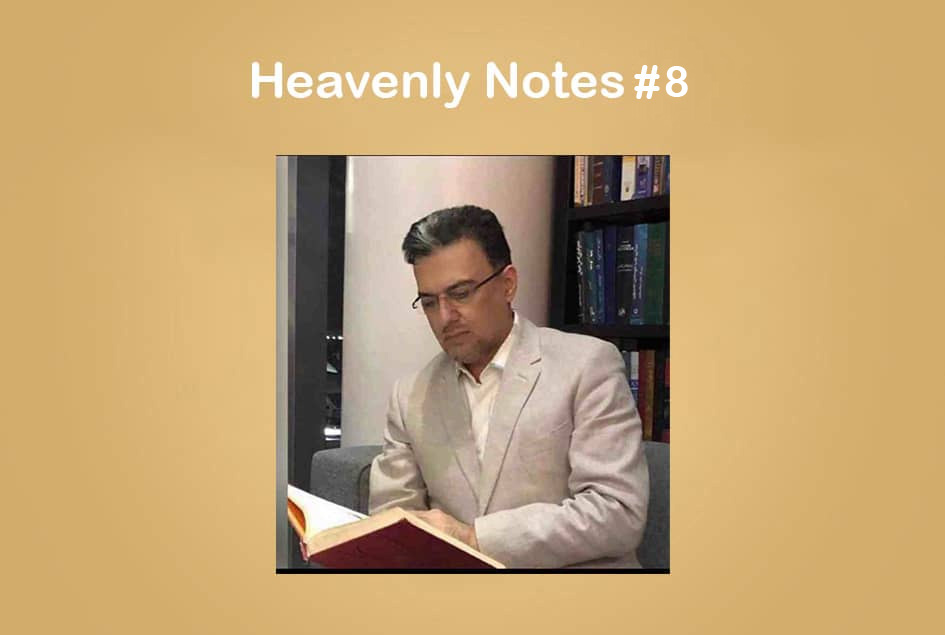
Chapter 2: Dr. Mohammad Taqi Hashemian
Factors in the Flourishing and Endurance of Iranian Culture and Art
In this culture, art was a means to enable daily life to be lived in accordance with Islamic standards, as well as to properly perform religious duties and honor religious rituals. On the other hand, it could facilitate the transfer of philosophical insight and Islamic mysticism to society and different generations as much as possible. Therefore, in Iran, which is considered the birthplace of many Eastern arts, it has developed and been elevated in these fields. Examples of this excellence and flourishing in Iranian art can be seen in architecture and its ornaments, as well as in industrial arts such as carpets and various floor coverings, pottery, metalwork, miniature painting, book arts, wood arts, stucco work, stonework, and many others, which are full of various and diverse designs and patterns. Each of these designs and patterns, with its specific symbolism, has embodied the cultural concepts of Islam. Furthermore, these interests and beliefs, along with the issue of endowment, have led to the preservation and continuation of this rich cultural heritage over many centuries.
The entry and dominance of a specific culture in a society can sometimes completely erase parts of its art, techniques, and industries, or, conversely, put them on a path of greater growth and flourishing, or transform their evolutionary course.
The advent of Islam and its entry into regions like Iran created a tremendous transformation in various dimensions of the material and non-material culture of this great land, which was based on the theoretical and ideological foundations of the new religion. Among the things that were influenced by the intellectual foundations of Islam were Iranian arts. The industrial arts are the result of the valuable toil, thought, and experiences of the dedicated and unknown artists of the past of this country, which have been passed down orally and from generation to generation and are available to us today. The importance of these arts in the social and economic arenas is not hidden from anyone, especially since as the country’s oldest export goods, most labor-intensive arts, and most in-demand artistic goods, they have had and continue to have a special place in people’s daily lives and, consequently, in the planning of officials at different times. Despite all the ups and downs, these arts have played a role in various fields and have always had important functions. On one hand, they have been used in various forms to meet some biological needs, and on the other hand, due to human emotional, psychological, aesthetic, and delicate needs, attention has been paid to their artistic aspects. Also, because they have appeared and manifested in various aspects of life, they have found their way into the privacy of human life, penetrated his places of worship and social gatherings, and sometimes been placed in the position of symbols, so their cultural dimension is also considered. Furthermore, these arts have provided a livelihood for many who are directly or indirectly involved in them, and thus have played a role in the economic prosperity of the region and the country throughout history. In total, these factors have provided a social and even political position for Iranian arts and have attracted the attention of governments, as well as cultural and religious authorities, in every era (Chitsazian, 1282, 102). It is not surprising that industrial arts with this level of importance and function are not unaffected by the thoughts and beliefs of the people of the society. In the Iranian-Islamic culture, the range of human movement is from “the ground (farsh)” to “the heavens (arsh)”. Man opens his eyes to the world from the ground, and in the highest stages, in paradise, he reclines on couches whose linings are of silk and brocade, in perfect honor. This is while they are reclining on couches with linings of brocade and silk and the ripe fruits in those two gardens of paradise are within reach.” (Al-Rahman 54).
In Iranian culture, industrial arts are a means for flight, and the smoother this means is, the better and more excellent the flight will be. Industrial arts, like other Iranian-Islamic arts, have a divine basis. In other words, an art is supported by Islam if, firstly, it is based on divine thought, secondly, it has no hint of non-oneness, and thirdly, it does not pose an obstacle to Islamic purity.
Therefore, the collection of industrial arts in Iranian-Islamic culture are exalted and worthy of respect arts that are used in various fields of human life and, in addition, play a role in his mystical solitude.
In this vision, ordinary decorative, applied, industrial, and book arts, as well as valuable works, are included, and the only basis of this vision is Islamic thought and idea, which in each case appropriately shows its manifestation in these arts.
In fact, the form of Iranian arts in the Islamic period has been transformed into abstract art, whose aesthetic values are specifically hidden in “form” and “color”. The result of this ancient perspective has been the creation of numerous artistic works with semi-magical characteristics as well as pure decorative arts.
Iran, which is the cradle of various arts, has played a more fundamental role among Islamic lands and, inspired by these intellectual foundations of Islam, has continued to tirelessly develop and nurture its industrial arts, and with the creativity that Iranian artists have shown and continue to show, it has succeeded in elevating the level of these arts.
